
Storage is the second-largest cost in a hybrid system — and the place where people most often buy cheap and pay twice.
The contenders
- LiFePO4 (LFP) — today’s standard: 6,000+ cycles, 95% usable capacity, tolerant of partial charging;
- gel/AGM — lead-acid of the previous era: 800–1,500 cycles, only ~50% usable depth, cheaper upfront.
The arithmetic that settles it
Gel: 10 kWh nameplate → 5 kWh usable × 1,200 cycles ≈ 6,000 kWh over its life.
LFP: 10 kWh nameplate → 9.5 kWh usable × 6,000 cycles ≈ 57,000 kWh.
Ten times the energy at 2–2.5 times the price.
Practice adds its own argument: a gel bank accidentally drained flat a few times is scrap; LFP is protected by its own BMS.
When gel still makes sense
A rare-use backup on a minimal budget, or unheated rooms with hard frost (LFP dislikes charging below zero — though heated all-in-one units have solved that too). Everywhere else in a home: LFP.
Sizing the capacity
- Count the evening-night load: lights, fridge, router, TV, boiler — typically 3–6 kWh;
- add a cloudy-day margin if you want autonomy rather than just backup;
- for most homes the starting point is 10 kWh — exactly what the Fox ESS P100 carries built-in (LFP, 6,000 cycles, expandable to 30 kWh).
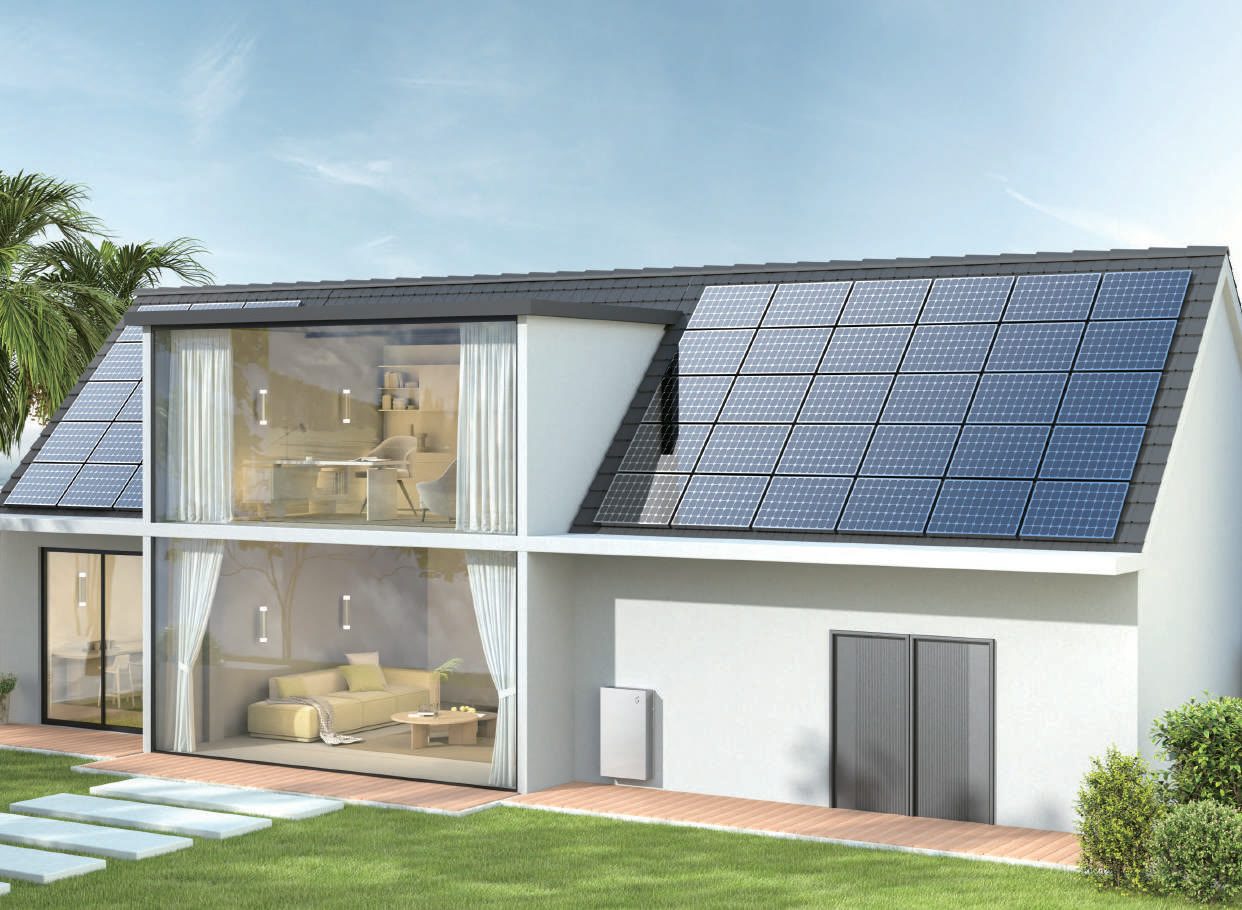
Unsure about capacity? Start with the base unit — modern systems expand with modules, no inverter swap needed.
Want numbers for your exact project?
Tell us your market and requirements — we reply with a tailored calculation within one business day.