
Panels live 30 years — and their mounting must live just as long. Here is how arrays are fixed to different roofs, and which installer mistakes the owner ends up paying for.
Pitched roofs — the base case
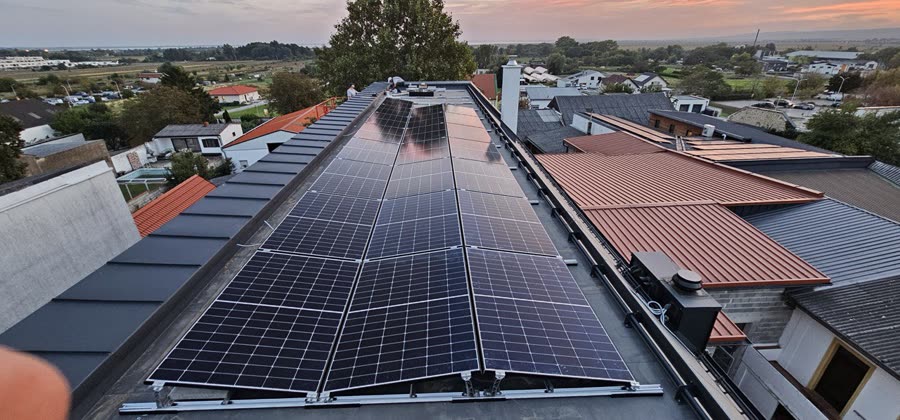
- Metal tile: brackets bolted through to the rafters with EPDM sealing at every penetration — never screwed to battens;
- corrugated sheet: the same, or top-wave brackets;
- standing seam: the best case — clamps grip the seam with no drilling at all;
- bitumen and ceramic tile: dedicated hooks per type; ceramic requires an installer who can re-lay tiles.
Flat roofs
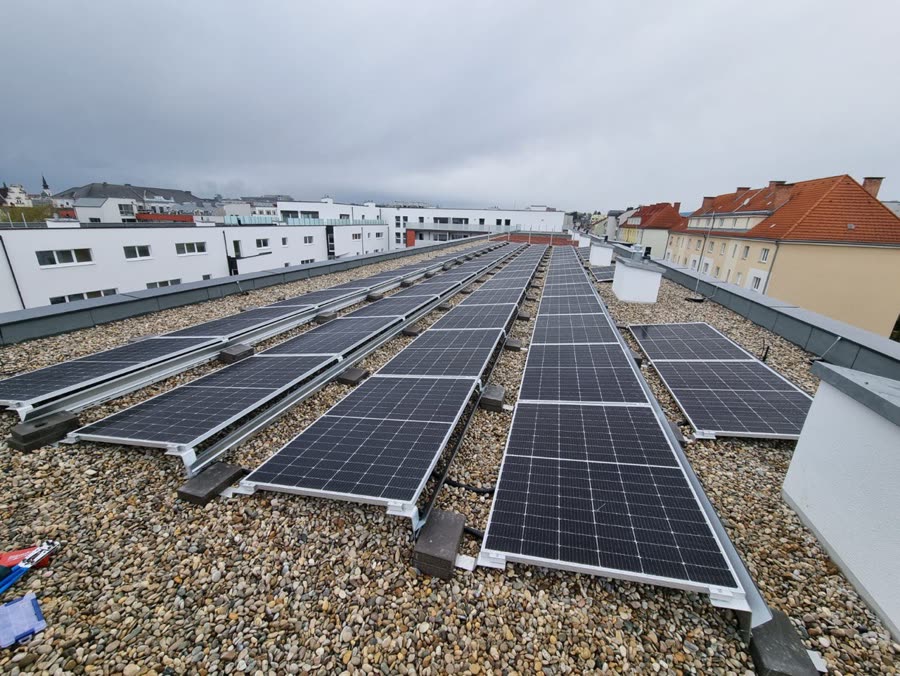
Ballasted systems — frames at 10–15° weighed down with concrete blocks, waterproofing untouched. Exactly how the 180 kW plant on an urban roof in Austria from our references is built.
Tilt, wind, ventilation
- optimal southern tilt is 30–35°; ±10° costs single percentage points;
- modules are rated at 2,400 Pa wind load — but roof edge zones need a per-project calculation;
- a 10–15 cm ventilation gap under the panels cuts heat losses in summer.
When the roof is the wrong place
A north-facing pitch, complex geometry, an ageing roof or a planned renovation are all reasons to consider a ground-mounted array instead: costlier structure, but perfect angle and easy maintenance.
Mistakes owners pay for
- Fastening to battens instead of rafters — the array «leaves» in the first storm;
- skipped sealing gaskets — leaks after 2–3 seasons;
- differently oriented strings on one MPPT — a permanent 10–15% yield loss (why — in the inverter guide);
- non-UV-rated cable — insulation crumbles in 5 years.
Want numbers for your exact project?
Tell us your market and requirements — we reply with a tailored calculation within one business day.